I didn't manage to finish all my book reviews last year, so I will be catching up with those before posting the books from this year. If you're not into books, please just wait until later this week when more sewing will post :)
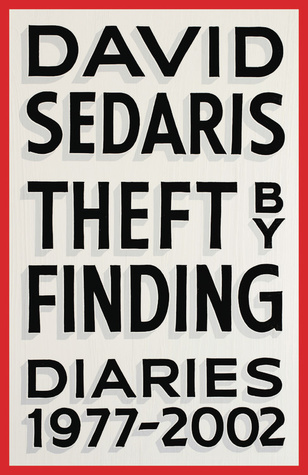
Theft By Finding is a collection of actual journal entries written by David Sedaris from 1977 to 2002. If you've ever read any of his other books, this one is right in line with his style - all his other books are written by consulting his journals for memories. These journal entries are equally hilarious as his stories from his books and with his same wit and sarcastic way of looking at the world. Some of the entries are more introspective, some are just to talk about something he noticed that was ridiculous. I highly enjoyed this book, and I would definitely recommend the audio book - just like most of his other books, this is read my Sedaris himself, so you get the true sound behind the words.
I give this book 4 out of 5 stars.
Hedda Gabler is a classic play by Ibsen that I picked up at random. Hedda Gabler is a beautiful, well off woman who marries a man she thinks will be a genius of his time. She soon realizes that he will no climb as high as she once hoped, and due to her lack of any sympathy or moral fiber she starts envisioning other ways to improve her situation. She begins manipulating old friends and finds herself in a compromising position she has not anticipated. All her conniving eventually lead to her demise. I have to say I don't really understand the significance of Hedda Gabler. She is deliberately written as a terrible person, which makes me not really care what happens to her... I can see how this might make for an interesting play to watch, just not super interesting to read. My fault there.
I give this book 3 out of 5 stars.
White Oleander is the story of what happens to the fictitious Astrid Magnusson, daughter of a murderess. When Astrid is young her mother poisons her ex-boyfriend and is put in prison, leaving Astrid in the hands of "the system", passed between group homes and foster care. Astrid is not the typical child to be in this position, so she sticks out from all the other children. She deals with being shot, the death of a beloved foster mother, the interest of an older man, and much more. Astrid tries to reconcile her situation with her mother as she deals with the life she has been thrust into. I picked this book up because I loved the film so much when I was in high school, and I was surprised at how close an interpretation the film is. I enjoyed the books just as much as the film.
I give this book 4 out of 5 stars.
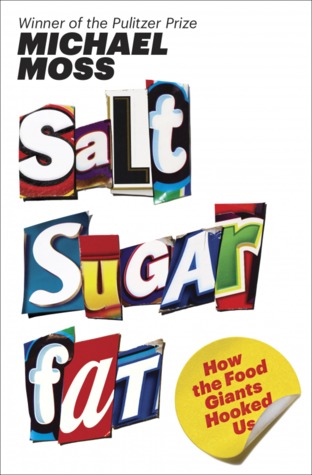
Salt Sugar Fat is an exposé of sorts written to enlighten us about what is actually in the food we eat. Big food companies have had little regulation with chemical additives in the foods we eat, letting them take advantage of consumer trust where food is concerned. Large food companies need to have something to make you want to buy their product over the competitor, so the 70s through the 90s became a free for all of added sugar, salt, and fat to improve the flavors of the foods we love, all things that toy with our brain chemistry and make us crave the foods more. This book talks a lot about the science of craving and how it has been studied and exploited. From a business aspect, this is all fair and it's technically our fault for not questioning the things we put in our mouths all along. From an ethical standpoint, it's a blatant breach of public trust. We thought food was food, so how would we question one of the most basic needs of human life when we had no reason to do so at the time? The result of all this salt, sugar, and fat is now one of America's most common health problems: obesity. The end of the book talks about what some companies are doing to help with the childhood obesity crisis, but really isn't it too little too late? We are all completely addicted to these additives to the point that we can't stand the taste of foods without them.
The books poses an interesting argument, but it was a little hard to get over the out and out "vigilante for justice" tone of the book. It's trying too hard to sell you on this idea. I prefer to have the information presented objectively, then maybe add the opinion of the author in the conclusion instead of having it throughout the entire book. This book was written to call out our food producers and government for allowing this to happen, but it in my mind this does bring up how much our personal involvement can be factored in. Did these companies add this junk to our foods? Absolutely. But did we, as consumers, pay attention to what we were eating? No we didn't. We just bought what tasted good, which we still do to this day. There is fault on both sides. In spite of my dislike of the books tone, there is still very good information in its pages. This is definitely worth a read, just keep in mind that you should try to hold off the open persuasiveness of the author.
I give this book 3 out of 5 stars.
The Omnivore's Dilemma is an objective look at what our foods go through before they reach our plate. Michael Pollan does research from plant to plate on 4 separate meals: a modern, processed meal at McDonald's; a modern, processed "Certified Organic" meal; a local, non-processed organic meal; and a non-processed self gathered and hunted meal. The first meal reveals that everything in the McDonald's meal is made of corn in some way, going into detail about our government's ties with our corn producers and how it plays the major role of everything in our grocery stores. The second meal is obtained at Whole Foods with all certified organic products, involving research into the few regulations that actually make something "organic" legally speaking (basically just that no fertilizer was involved). The third meal is obtained from a small farm where the animals are all grass fed and circulated around the land to do the least damage to the ground, also the animals are killed on the premises and go straight to the hands of those who will eat them. The fourth meal is obtained entirely by the hands of the author - hunting for game, gathering plants, doing any additional processes himself.
I really loved this approach to understanding what happens to our food before we eat it - this really broke down some of the mysterious practices of food production as well as explaining the why behind each step. While the author does seem to lean toward the 3rd meal more than the others (frankly, after reading the book I don't see how you wouldn't), Pollan largely keeps his personal opinion out of the meals. He presents the information as it comes to him, but he still eats each of these meals himself. What I really liked was the discussion about the practicality of each meal in our modern society. While it would be great to be able to produce all of our food ourselves, it's just not realistic with the pace of the world today unless you completely unplug, which most of us are not able to do. This book really brings out great questions to ask yourself about what you are paying for and why with food. While it may not change everything you eat, it definitely gives you an honest look at exactly what you are eating.
I give this book 5 out of 5 stars.