Showing posts with label review. Show all posts

Monday, May 6, 2024

FO: Rose Street Cardigan (Plus Video Review!)

 
My latest sweater is finished and I am so thrilled! I've been wanting to make this since the pattern was released last April and now I finally have one of my very own :) This is the Rose Street Cardigan by Syndey Crabaugh of Squid's School of Vintage Knitting. I adore her patterns and this one struck me immediately. 
The body of the sweater is very simple - just basic stockinette with a ribbed yoke on the front and back. This made the body incredibly fast to knit. I made mine up in Knit Picks Stroll in the Duchess Heather colorway that I grabbed on sale over 2 orders (I bought 6 before seeing this pattern, then bought 2 more when I knew I wanted to use it on this pattern) and it worked just beautifully. This is one of my absolute favorite yarns, so I always love using it.
Here's my Ginger Rogers pose to show off the best part of this sweater - the fantastic sleeves! They are long bishop sleeves with a simple lace detail and I adore them. I knitted my sleeves flat through the whole cuff before I realized it was written to be knitted in the round. Oops. I was not going to redo the cuff, so I just knit them both flat and it worked out fine. 
I'm also thrilled that Syndey's newest pattern (The Four Seasons Dress) includes a written description for setting in the sleeves. This was my only hang up with making this because I can never remember how to do the puff and I had a hard time finding her video on Patreon. The written instructions worked fantastic (and if you are a Patreon member of hers, you automatically get access to both of these patterns, so it worked out great). 
As per usual, I backed my button bands, and this time I filmed a tutorial on how I do this - so if you are interested, check My YouTube Channel next week for that. I used my usual rayon Petersham ribbon and some pretty vintage buttons. I did have a little snafoo - I miscounted my button holes, so I had to add 1 more button that did not match. I got as close as possible from my stash and put it at the bottom, so I think it blends in well enough that no one will notice but me.
And that's my Rose Street Cardigan! I love how it turned out. It is comfy and cute. I just wish it was colder so I could wear it more often before the end of the year. I have also made a YouTube video review about this project if you prefer to hear the deets in that way :)

Summary:

Yarn: 7.24 skeins of Knit Picks Stroll in Duchess Heather - $29.26

Pattern: Rose Street Cardigan by Syndey Crabaugh - $6.50

Notions: Rayon Petersham Ribbon - $6.50, 8 buttons - $ 0.45

Time: 2 months

Total Cost: $ 42.71

Wednesday, October 24, 2018

Book Reviews: 16 - 20 of 2018

Like many others, I read Flat Broke with Two Goats because it was the Big Read with the public library. I figured why not, so I gave it a whirl. I must add my opinion to the countless others - who the heck chose this book? More than that, who decided it was good to publish? The author is a typical upper middle class wife before the recession who is suddenly finds out that her husband has been hiding the terrible state of their finances for years and is forced into foreclosure and living in a friend's (amazing by anyone else's standards) cabin in the mountains of North Carolina. She has a waterfall in her front yard. She has acres and acres to herself and a 3 story cabin for only $275 a month. Her kids still get to go to private school and college. Yet she still whines and whines about how terrible her life is and how she just can't take it. I kept reading this hoping the author would eventually hit the "ah ha" moment that most people living through adversity have the opportunity to gain, but nope. She spends her time buying goats with money she doesn't have and drinking $15 craft beers with her husband to wind down at night. The idea of this book had great potential ... if only the author had actually learned something from her experience. Instead she just kept living and thinking the same way she had before, complaining about things that most others would have seen as a God-send in her situation. If you want to be aggravated for a period of time, by all means read this book. I guess I just don't enjoy reading a story where someone creates their own problems and never learns anything from them all while complaining about how everyone else in their life put them where they are. I doubt I will ever read anything with the "Big Read" again. I give this book 2 out of 5 stars.

Thérèse Racquin tells the story of the book's namesake, an quiet orphaned girl who is taken in by her Aunt and cousin. Her aunt, Madame Raquin, has a small inheritance that she uses to endulge her son, Camille's, every whim. This brings them to Paris where Madame Raquin buys a shop in a dingy arcade to pay their bills. Thérèse just accepts her life as it is, working in the shop while her cousin stays in bed due to illness day after depressing day. Eventually Madame Raquin convinces Thérèse to marry Camille, which she agrees to because she is completely indifferent to life and it will secure her a home and livelihood. Life continues in this way until Camille get a job and brings a friend home for dinner. The friend, Laurent, becomes integrated into the family and before long he and Thérèse become attracted to each other. For the first time, Thèrèse has a zest for something in life and a secret affair begins. The two are happy in the beginning, but like most things in life the thrill wears off soon and the two start entertaining the idea of how great life would be if Camille was not in the picture.

I can see how this cautionary tale was considered too vulgar in the 1860s when it was first released. The tale ends in typical Zola fashion - depressing and twisted. The lovers eventually drive each other crazy and their tortured lives affect those around them. The story is interesting, but reading this further solidified my dislike for Zola's style. Everything is the most seedy and dirty aspect of human life. I'm not naive enough to think this is unrealistic, but it's not something I want to put myself into all the time. That said, this is a quick read, and like I said - it's interesting, but you can pretty much see what coming fairly early in the story. I give this book 3 out of 5 stars.

Heart of Darkness is the dark story of a voyage up the Congo river in the 1890s. Charles Marlow comes from England to the Congo to work for a Belgian trading company, piloting the boats up and down the river. Things start out seeming a little strange with the other men he works with, but one night the boat is attacked in the darkness and his uneasy feelings begin to make more sense. The story is based off the author's own experience in the same position as the narrator. At the time of publishing, this was considered a horror story. I found it to be interesting but a bit fast paced to really be scary. It is certainly neat to hear accounts of Africa during the late 1800s. I give this book 3 out of 5 stars.

Everything I Never Told You follows a family in the 1970s who are faced with the suicide of their teenage daughter. The Lee family - James (dad), Marilyn (mom), Nath (oldest son), Lydia (middle daughter), and Hannah (youngest daughter) are a mixed race Asian family living in a small town in Ohio. The parents put demands on their 2 older children in an effort to make them accomplish the things they dreamed of but could not realize in their own lives. James wants Nath and Lydia to be popular and sporty, but they are both antisocial and Nath is obsessed with space. Marilyn wants Lydia to be a doctor to show that a woman can be more than a mother, and Lydia says yes to everything Marilyn throws at her in an effort to keep her mother happy so she will not leave their family. Hannah is an accidental child who is mostly ignored by her parents. When Lydia's body is found in the local lake, all the family members are forced to come to terms with the unhappy life Lydia lead while they were too focused on themselves to notice. The story was pretty much depressing from beginning to end, exploring the various neuroses of each family member and their history that made them this way. Each person is effected by the parenting they had, which then effects how they parent and keep the harmful cycle going. Some aspects were interesting, but it just never really brought it's head up the entire time, which is a little hard to enjoy. I give this book 3 out of 5 stars.

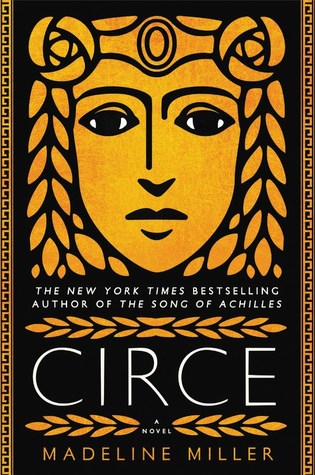
Circe is a novel account of the witch from The Odyssey, told through her own perspective. As the disappointing daughter of Helius, Circe seems to have no God-like abilities until she unknowingly turns the mortal that she loves into a God and then turns a nymph into a monster. She is banished to a secluded island as punishment, where she spends her days honing her craft of herbs and spells.  Circe is woven into the tales of other Greek myths - Icarus, the Minotaur, and Medea. Various mortals land on her island, mostly sea men who see a lone woman and try to take advantage of the situation only to be turned into pigs and trapped by the witch. When Odysseus lands on her island, his men get much the same treatment until he comes to get his crew back. This leads to an affair between Odysseus and Circe while he and his men live on her island for a time. Eventually Circe must make a choice between living amongst the Gods who never cared for her and the mortals she comes to love.

The book was very well written and entwined all these myth together in a flowing way. I enjoyed reading these stories through a central perspective, and Circe's voice is backed up through her own experiences in the book. I enjoyed this new twist on mythology. I give this book 4 out of 5 stars.

Tuesday, October 2, 2018

Book Reviews: 11 - 15 of 2018

The Queen of Spades is a classic Russian short story. A young man learns of a woman who was told the perfect combination of cards to play to make her fortune and save her from ruin. The woman is now old, so the young man starts making overtures of love to the old woman's companion. Once he gains access into the house, he surprises the old woman and tries to threaten her into telling him the combination. Much to his dismay, the old woman dies from shock and he is left with guilt and no winning cards. After paying his respects at her funeral, the old woman's ghost comes to him in the night and tells him the cards and how to use them as well as making him agree to the terms that were handed down. The very next night he tempts fate and tries to play the cards to a rather interesting outcome.

I am surprised at how much I enjoyed this book. It's a quick story, but it really is an interesting idea and it really could apply to any period in history. This was my first experience reading Pushkin and it definitely made me want to read more. I give this book 4 out of 5 stars.

The Portable Dorothy Parker is a great collection of her work. The book is made up of various short stories and poems as well as a few articles. The overall tone was snarky and poignant. I really loved The Big Blonde - I think that was the most touching story in the bunch, interesting that it is based off her own experience. Miss Parker is able to look at the women of her time and show them in a sarcastic way that they probably didn't see themselves. The poetry is admittedly of a style our time hasn't really been taught to appreciate. Also the poems were mostly about how death would be, so not something everyone can relate to but an interesting window into that way of thinking. As this is a short story and poem collection, you can just keep listening through anything you don't love and something new will come up soon. It's worth the read for sure. I give this book 4 out of 5 stars.

State of Wonder is the story of Marina Singh, a medical doctor turned pharmaceutical worker who finds herself on an adventure in the Amazonian rain forest. The company Marina works for has financed a new miracle fertility drug and they need someone to go down to Brazil and check the progress so they have a timeline for a return on their investment. Marina's lab partner went first, but when the company receives word that he died of a fever they ask Marina to go and find out what happened. Marina finds herself in a remote Amazonian village with her old college professor and a tribes-people whose women are able to get pregnant into their 70s. Marina assists in the research while trying to learn more about her deceased partner as well as helping the local tribes with medical complaints so the other researchers can complete their work. Eventually Marina learns to true point of the research and what it can mean for the rest of the world before a pretty interesting twist at the end.

I really enjoyed this book. The idea is pretty crazy - a fertility drug that could let women of any age have a child - yet at the same time feels fairly plausible in our modern world. The book is very well written and I was able to just focus on the plot unfolding. I'll confess that I wanted to read this book after Liz Gilbert's mention of it in Big Magic - I had to see what this story was that the two authors were both inspired by. I was much happier with this book than the other Ann Patchett I read a few years ago. I definitely can recommend this one though - I constantly wanted to know what would happen next.  I give this book 4 out of 5 stars.

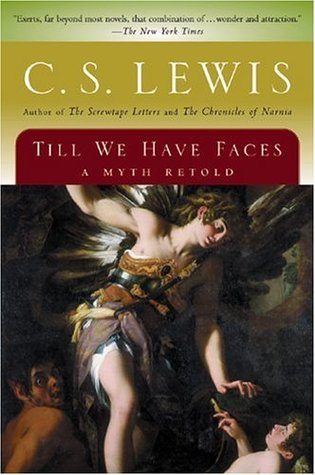
Til We Have Faces is a retelling of the myth of Cupid and Psyche. I was intrigued about this book when I found out C.S. Lewis felt this was his best work. The book gives a different take on the myth we are taught, giving the whole story through the eyes of one of her sisters. In this tale the oldest sister loves and raises Psyche after her mother dies. As Psyche gets older, her beauty grows to the extent that the people in her kingdom believe that she is a God. Eventually the town decides to sacrifice her in hopes of appeasing their God and removing their famine and other hardships. They chain her up on a mountain and leave her for the God, assuming she will soon be dead and not worry about her any further. Her sister is stricken by the loss of her favorite sister, so she goes to collect Psyche's remains for a proper burial only to discover that her body is not there. Psyche appears and explains that she is now the wife of a God, but she does not know which one because she is forbidden to look at him. Her sister thinks Psyche is crazy and comes up with a plan to help her see "the truth". She brings an oil lamp the next time she visits and makes Psyche swear she will look at the God, thinking this will show that the God is a monster or not a god at all. Things don't turn out how she anticipates and she has to live with this for the rest of her life.

Overall this was an interesting idea and it definitely humanizes the classic myth. The original story has both sisters jealous of Psyche's husband so they maliciously conspire to wreck things, and I can appreciate this telling much better. This method feels more natural - that the motives are all in the best interest of the victim but that they go horribly wrong. I think this version makes the story more palette-able even for a reader that is not interested in Greek mythology. I give this book 4 out of 5 stars.

Secondhand Time should be required reading. The book is made up of interviews with various Russians who lived through the Soviet regime, covering everything from the revolution to perestroika to the modern switch to capitalism. There are those who miss Stalin, those who hate him, and those who worked with him. There are true Russians as well as those from other Soviet states like Azerbaijan, Ukraine, Georgia, and many more. Alexievich interviews the young and the old alike, which comes across as the indoctrinated and the disillusioned. This book shows the true mix of feelings on the Soviets and opens up about things I never learned about before I read this book. Some of the tragedies people endured were truly heartbreaking, yet they still continue on in a stoic and accepting manner. If you have any interest in the state of modern Russia and how its recent history has brought it to where it is now, you should read this book. It was excellent. I give this book 5 out of 5 stars.

Monday, September 24, 2018

Book Reviews: 6 - 10 of 2018

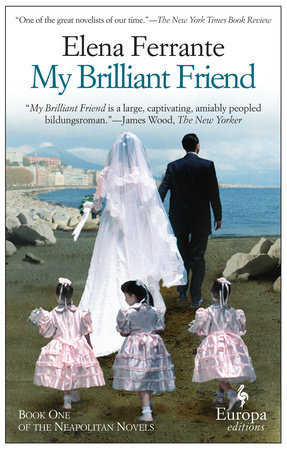
My Brilliant Friend is the story of the young life of 2 friends growing up in Naples, Italy in the 1950s. The two girls become friends early on, but circumstances cause a slight separation - though they never fully lose touch. As the girls grow and mature, the narrator is able to stay in school and excel while her friend, Lila, stays at home in spite of how naturally intelligent she is. This book is part of a series and this part ends with Lila's marriage. The story was fine enough, but not really my thing. It was interesting to hear about life in the lower class areas of the time in Italy, but overall the story seemed to be missing something for me - I guess I don't really care for "series" style books. I give this book 3 out of 5 stars.

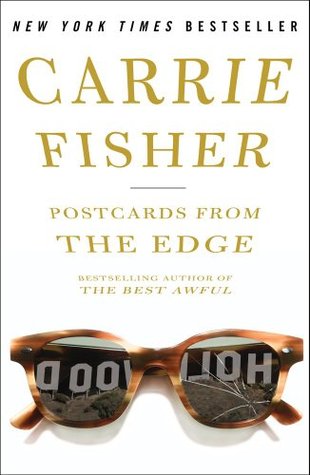
Postcards From the Edge is probably where a lot of our stereotypes about drug rehab come from. The book is semi-autobiographical and goes over the time Carrie spent in a rehab center and the time immediately surrounding it in her life. The book touches slightly on what put her to this point, but it is also not lacking in punny quips. The standard rehab and __ anonymous meetings have not changed much since the 80s, so it is easy to relate if you've had any similar experiences. Overall the book was entertaining to read, if a little contrived at times. I give this book 4 out of 5 stars.

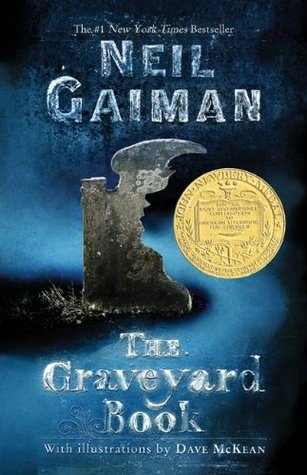
The Graveyard Book tells the story of Bod - full name Nobody Owens - a baby who is left in a graveyard and is raised by the residents ghosts there. The entire community of various aged ghosts bring Bod up and teach him what they know all while giving him protection from the man who killed his parents and who is looking to finish the job. Bod goes on many interesting adventures, culminating in learning how he came to be where he was and why. The book is extremely inventive - as one can always count on from Gaiman - and I very much enjoyed reading. I give this book 4 out of 5 stars.

Gone With the Wind is the now classic tale of Scarlet O'Hara and her life during the American Civil War. The story hardly needs a recap from me, so I will just say that after being a life long fan of the film I am now just as much a fan of the book itself. The book gives so much more depth to Scarlet, helping you make sense of her shrewdness and willingness to do what is necessary to ensure her survival. The dialogue in the book truly is just like the movie, which made me appreciate the film even more. This was a wonderful read that I couldn't put down, and I highly recommend giving it a read. I give this book 5 out of 5 stars.

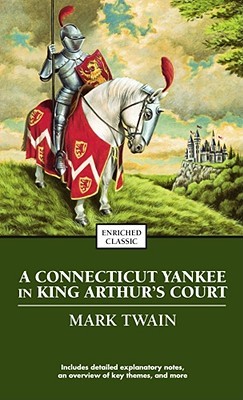
A Connecticut Yankee in King Arthur's Court is pretty amusing to say the least. A man from the late 1800s is transported into the time of King Arthur and uses his knowledge "modern technology" to make himself a "wizard" in the eyes of Arthur's court. He stays there for quite some time, establishing democracy, banks, production lines, and much more, essentially running the country for Arthur and helping through whatever calamity arises. The biggest focus of the book is showing Arthur the plight of the common peasant and doing away with slave labor in the kingdom. While I am a devout classics reader, I will admit that the language of this book took some time for me to get used to and really enjoy it. After you muscle through the first section, it becomes much easier to follow. Overall the story is funny and a great commentary on how Twain believed the world should be run. I give this book 4 out of 5 stars.

Friday, July 13, 2018

Book Reviews: 1 - 5 of 2018

Wow - so I haven't posted about any of the books I've read this year, lol. So these are a few I read at the beginning of the year...
The 7 Habits of Highly Effective People by Stephen R. Covey was a great way to start out my year. I went into reading this expecting a typical self-help book, but I was happily surprised. This book is extremely intelligent and covers basics that make sense no matter what your individual beliefs are. The 7 habits really are universal principles that can help everyone. I was thrilled to discover I was already practicing a few, so I consider myself on my way, lol. Who knows if any of us will ever perfect being "highly effective", but this book certainly gives you the blueprints to make that happen if you work at it throughout your life. I aspire to get better, and I plan on re-reading this periodically as a refresher. This should seriously be required reading. I give this book 5 out of 5 stars.

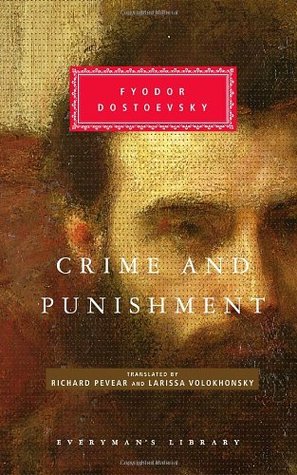
Crime and Punishment by Fyodor Dostoevsky is a true classic that deserves its time honored status. The book follows the story of Raskolnikov, a poor student scraping by in any way possible. He develops an idea that murder can be justified if it benefits more people than it harms, and he also believes that he is intelligent enough to not get caught. He justifies murder by believing that some people are destined to be great men and no one questions those they kill along the way to achieving their greatness. He methodically plans out who he will kill, gets everything ready, then carries it out. Raskolnikov is then haunted by his actions for the rest of the book, constantly worrying about getting caught. I also believe it's very ahead of its time with the lengths he goes to to protect himself from forensic evidence. This is certainly one that everyone should read at some time.  I give this book 4 out of 5 stars.

Breakfast at Tiffany's by Truman Capote is a novella told through the eyes of a nameless narrator. He tells the story as a memory of his dealings with his interesting neighbor in his first New York apartment - Holly Golightly. Holly is a hopeful social (more-so financial) climber trying to marry into money. She is a model who tries to rub elbows with any man that might make her rich. The narrator falls in love with her, as most men do, and he steps in to try and save her from some of the unsavory situations she puts herself in. Having always loved the film based on this book, I was very surprised at how little in the movie is actually in the book. It's an interesting story, but the film certainly fills in the gaps better than the book does. If you're expecting a written account of the movie, you will be disappointed. I give this book 3 out of 5 stars.
The Time Machine by H.G. Wells is a story of the future we may inherit. The adventurer creates a time machine and takes himself on a few journeys into the far distant future. He ends up 800,000 years in the future and discovers that the human race has split into two species - the Eloi and the Morlocks. Each of the species embodies a separate side of human nature. The books becomes far more about evolution and analyzing what we as humans represent than any time travel. This is a social commentary. I will say that while the story was interesting, I listened to one of the worst audiobook narrators I've ever heard read this book. It was so choppy that I would have to listen to passages again just to understand the sentences. That made it very difficult to get into the story. I'll have to try physically reading this again some time. I give this book 3 out of 5 stars.
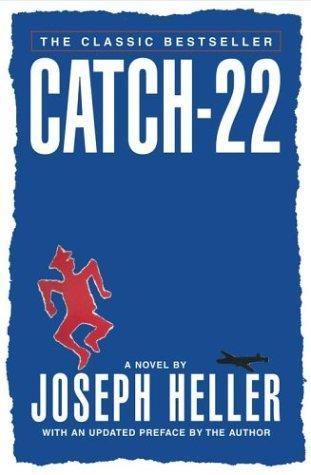
Catch-22 by Joseph Heller is one of those "Books you must read in your lifetime" that I can now check off my list, but that's the most I can really say for it. I firmly believe that you need to have lived in the time this was written (where everyone had a knowledge of the military and how it is run) or have spent time in the military to fully enjoy this book. I acknowledge that the concept itself of Catch-22 is brilliant, but the rest of the book is full of such ridiculous characters and plot lines that go absolutely nowhere that I just couldn't enjoy it, not to mention the fact that every female character in this entire book is either a loose nurse or an actual prostitute. Aside from a few stories that were entertaining, the rest of the book just seemed pointless to me. I fully realize that there are people out there who would argue the absolute hilarity that was lost on me, some may even thing I'm dumb for not catching it - I'm fine with that. I honestly did not enjoy this book and it was a major slog to get through. At least now I can say I've read it and cross it off the list, lol. I give this book 3 out of 5 stars.

Thursday, April 26, 2018

Book Reviews: 41 - 53 of 2017

Wow - I kind of dropped off the face of the blogosphere for a few weeks! I promise I'm still here and still making things, I just haven't had anything finished to show yet. I have also been reading a great deal, and I made it a point to catch up on my reviews to finish out what I read last year. So if you're not into book reviews, feel free to skip this post. More sewing and knitting fun will be up soon!

Jonathan Strange & Mr. Norrell is basically a Jane Austen style story with added magic. The book presents magic as something that is real and was generally accepted in England, but has dwindled into a forgotten practice over 300 years. Mr. Norrell makes it his life's work to bring magic back to England but in a respectable sense - meaning he wants things how he wants them and only those of his choosing can learn the art. Jonathan Strange begins magic because a random vagrant tells him he is a magician (odd), but comes to be the second magician of the age. The two perform feats of magic to aid in the Napoleonic wars, raising magic's standing in society to be a respectable profession. Things are going well until a decision made at the beginning rears up to wreck everything they have accomplished.

This was a great book and very well done to the period. I found the descriptions of English society very believable, and I very much enjoyed the aspect of Fairy very interesting. I loved the constant switch between the real world and the Fairy world. This is one of those "intimidatingly large books" to a lot of people, but I feel it was large enough to properly describe all aspects of the story and characters, which I really appreciated. If you like Regency Era stories and magic, then I definitely recommend giving this a read. I give this book 4 out of 5 stars.

The Picture of Dorian Gray is the type of book that really shows me what was considered a "horror story" 100 years ago is very tame by today's standards. The story is an interesting idea - a man sells his soul to remain young and beautiful while a portrait of himself bares the brunt of aging. He spends his life doing terrible things, which come around to bite him in the end. I feel like it's a tale most of us know nowadays, but reading the book was still enjoyable. I love Oscar Wilde's witty retorts. I give this book 3 out of 5 stars.

MirrorMask is a Neil Gaiman story that he wrote as a film and then turned into this novella afterward (which I honestly did not know until after I read the book). I can't think of much to say since it's such a short story, but if you're a Neil Gaiman fan it does deliver. I give this book 4 out of 5 stars.
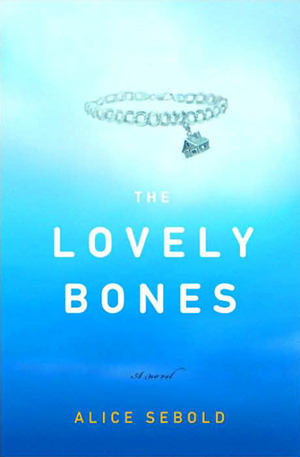
The Lovely Bones has probably been read by everyone but me at this point. This is the story of a serial killer in the 70s told through the eyes of one of his victims after she has already been killed. I loved the perspective in this book - really that took a tale we've (sadly) heard before and made it something above the norm and worth reading. Susie's family is broken in so many ways, and the book did a great job of showing how her death effected each family member and relationship. Things get a bit strange at the end, but overall the book was engaging and kept me wanting to learn what happens. I give this book 4 out of 5 stars.

Believe Me is a memoir by one of my favorite comedians - Eddie Izzard. I listened to the audiobook of this and in some ways it was better and in some ways it was worse. The entire book consisted of "long-windy-footnotes" that I'm sure are not in the actual book, consisting of many little side stories and quips. Sometimes these were hilarious, and sometimes they were tiresome and I just wanted to get on with the story already. I felt there was an arrogant amount of detail given to his younger years - no matter how much I enjoy someone's comedy, I certainly don't need to know what part they played in their school play each year, etc. Also he really felt the need to drive home the "there is no God" notion ad nauseum. I enjoyed this book for the most part, but I feel it is really only to be enjoyed by those who are already familiar with his comedy and therefore care what he has to say on some points. This was like a very long show, so buckle up if you decide to give it a listen. I give this book 4 out of 5 stars.

The Tale of Despereaux is an adorable story of a mouse who wants to be a knight. He falls in love with the princess Pea, and when he hears an ill-intention-ed rat's plot to kidnap her he jumps into action. This was a nice little read and I will definitely recommend it to those with kids. I give this book 4 out of 5 stars.

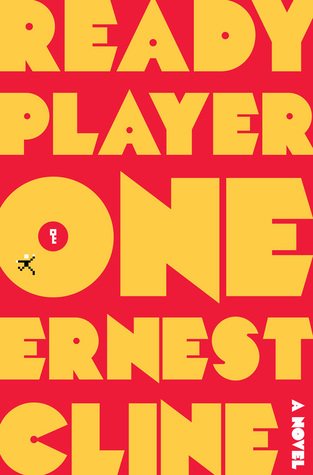
Ready Player One shows an alternate future in 2045 where life is so bad in the real world that everyone lives their lives digitally in The Oasis. The story follows Wade, a teenager who is obsessed with a video game quest to win the fortune of the deceased creator of The Oasis. Wade spends all of his time trying to discover the hidden clues in the game, and when his name shows up at 1st place on the scoreboard, things really kick off as other players and an evil major corporation try to beat him to win control of The Oasis. The book is full of obscure 80s nerd culture references from movies to music to video games. The story is typical in that just when you think the hero will be defeated, he pulls through (and, of course, gets the girl). The story was entertaining, and it was certainly interesting to have a video game world described in a book. I couldn't help but feel that the book was written with the full intention of being a movie though, so I think it will come across better that way. In spite of my grudge against YA fiction, I did enjoy this book and recommend it to others on the verge of nerd-dom. I give this book 4 out of 5 stars.

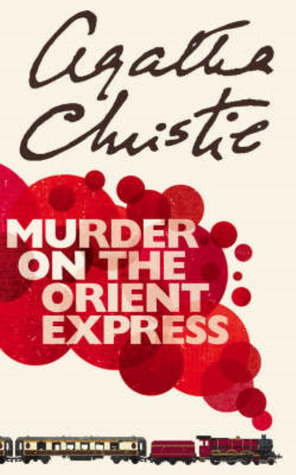
Murder on the Orient Express is a classic murder mystery with a slight twist at the end. Hercule Poirot boards the Orient Express simply to travel but finds himself being called into action to discover who killed one of the first class passengers. When the passenger turns out to be a much hated murderer under an assumed name, everyone in the train car has a motive to kill him. The plot unfolds as Poirot notices clues that no one else can see, ultimately discovering the cultprit. If you're a fan of mystery, this si certainly one to put on the list. I give this book 3 out of 5 stars.

David Copperfield is a story that seems to have heavily influenced the modern idea of what conditions child laborers endured in the mid-1800s. David's father dies before his birth, leaving his simple and lonely mother to care for him with her maid. Eventually, she decides to marry again, giving David the now stereotypical horrible step father. Mr. Murdstone treats his new wife as a know-nothing child, bringing in his unmarried sister to run the household for him. The two Murdstones try to teach David's mother, Clara, "discipline", both for herself and for her son. Eventually the Murdstones cause Clara's death as well as the death of her newborn baby. Upon his mother's death, David is sent to a factory to work for his living at the age of 11. The conditions are horrible and eventually David runs to the only living relative he knows of, walking for a few days to get there. His aunt, Betsey Trotwood, takes pity on him and saves him from the fate of the awful Murdstones' care.

With his aunt, life for David finally looks like it might be ok. She sends him to school in town and pays for his living with the Wickfields, Betsey's solicitor and his daughter Agnes, who become like family to him. By living there, he also associates with Uriah Heep, the solicitor's apprentice, whom is is constantly uneasy about (with good reason as the story unfolds). Eventually, David decides to become a proctor, and Betsey sets him up with Mr. Spendlow. David does not care much for Spendlow, but he falls immediately in love with his beautiful but silly daughter, Dora. Just when David thinks he will be able to propose to Dora, he finds out that his aunt's fortune is completely gone through some unfortunate investing, making him have to go to work. He does marry Dora, but their marriage is never very happy in spite of their love simply because they are such different people (a main theme of the book). I'll stop the synopsis there - suffice it to say that the story has many twists and turns, constantly upending the happiness of poor David and those he loves.

I found this book very interesting. In true Dickens fashion, the characters are just that - characters - many with very one-note existences and mannerisms. For some characters, this is what made them great (Betsey Trottwood) and for others it annoyed me to no end (Dora Spendlow - ugh). The overall message of the unfortunate circumstances of life and making the best of things was a good one, and the lessons David learns definitely make this worth a read. I find it interesting that this book is the most autobiographical that Dickens ever wrote, poor man. This classic certainly earns its place in literary history, but it's not Dickens' best, in my opinion. I give this book 3 out of 5 stars.

Braving the Wilderness - I read this quite a while ago, and when I think back on it the only things I can remember are that she talked about our need for feeling included in our society and how it works to our detriment. I know there was more in there, but having read a few of her other books before this one, they all seem to blend together. I did give this book 4 out of 5 stars, so I clearly thought more of it at the time, lol.
Children Standing Before a Statue of Hercules is a collection of short stories curated by David Sedaris. Some of these stories were wonderful and some I have kind of forgotten about. I loved the Patricia Highsmith story, Where the Door Is Always Open and the Welcome Mat Is Out, as well as Cosmopolitain by Akhil Sharma. This is one that I intend to read again at different times to see which stories resonate with me more as time goes by. This is definitely an interesting collection of stories though. I give this book 3 out of 5 stars.

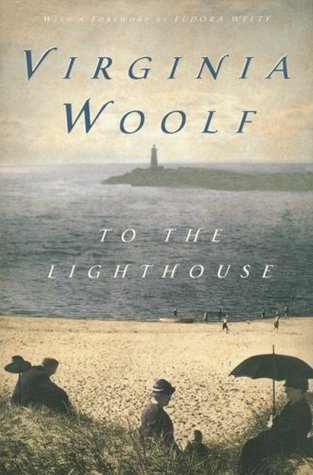
To the Lighthouse gives short glimpses into the lives of the Ramsay family while they are on holiday just before the 1st world war as well as years later. The story focuses on helping you to really understand the thinking and motivations of each of the family members while they are basically living an ordinary few days. The first half of the story has the characters all focused on living life while the second half has them all majorly effected by death. The story is beautifully written, even if not much really happens.  I give this book 3 out of 5 stars.

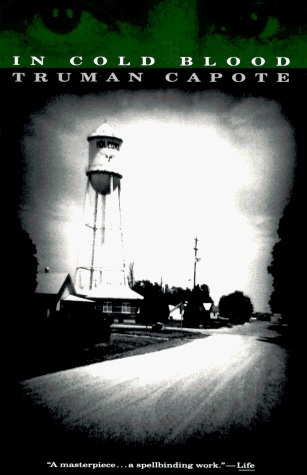
In Cold Blood is what started the True Crime genre. Capote chronicles every known detail about the death gruesome murdering of the Clutter family in Holcomb, Kansas. The entire story of the town is painted in great detail, so the reader gets a sense that they know and can therefor judge these people. The story keeps you wanting to know what happened and also tries very hard to make you sympathetic to the murderers in spite of there being to valid reason for this crime. I'm not a big fan of this genre in general, but the book is well written and suspenseful. Personally I don't enjoy the glorification of serial killers and the like so I don't much care what their motives were. The book was an interesting read in spite of my personal opinions though. I give this book 3 out of 5 stars.

Tuesday, March 6, 2018

Book Reviews: 36 - 40 of 2017

To Rise Again at a Decent Hour was a bit of a wild card books I picked up at random without knowing anything about it. The story follows Paul O'Rourke - a somewhat boring dentist. Life is going on normally until one day Paul finds out that someone has started a website and Facebook page under his name and is commenting with strange religious sounding posts on various articles around the internet. In his quest to discover who is making these odd posts, Paul discovers an ancient civilization and how he is connected to it. This book was kind of all over the place for me. To start with every time I started to think main character has something like-able about him, he would say something inappropriate or awful that made me just not care what happens to him. Also from where this story begins to where it ends up is just a big say wha? It would've been interesting if I cared about Paul O'Rourke, but with it odd segues into the main point of the story I was kind of glad to get this one finished and move on. I give this book 3 out of 5 stars.

Winesburg, Ohio is the classic novel mentioned by classic novelists. I picked this up because authors like Ayn Rand, Ernest Hemingway, and William Faulkner all have listed it among their favorite books, so I had to see what all the fuss was about. The book is a collection of short stories about a town called Winesburg, Ohio around the turn of the century. There are love stories, rascal fathers, town revenges, and much more in the stories as they show how they are all connected. As far as my own opinion about this book ... I feel like I must have missed something? While this gave an interesting view of life at this in a small town, I really did not enjoy reading this and it was a bit of a slog. I managed to finish it, always hoping that the big moment would be coming that makes everyone love it so much. For me this never came. Maybe I will read it again one day and figure out what others seem to see that I don't. I give this book 3 out of 4 stars.

You Are a Badass at Making Money is a branch off of You Are A Badass, which I read earlier in the year and loved. I really hoped for the awesome pep-talk to connect with me like it did in the first book, but this one just didn't entirely get there. A lot of the advice is to stop saying you hate money and send out the good vibes by having faith that money will somehow appear. When I'm struggling to buy a sandwich for lunch verses making one at home, I find the sheer obscenity of the sums mentioned in this book unfathomable. Sorry but it's not a good personal decision to commit to an $85,000.00 purchase when you can't afford to even fix your $1000.00 car. I get where Sincero is coming from - the "if you build it, they will come" mentality, but while she may have been the 1% success story with that amount of money, there are many people who make very sound investments and still lose it all. Maybe I'm just not there yet, but I just can't let go of rationality quite that much. I do still like her style, and I did enjoy most of the book. I give this book 4 out of 5 stars.

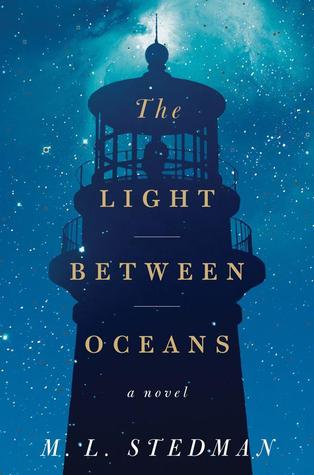
The Light Between Oceans is the story of an Australian couple who take in a baby that washes ashore at the lighthouse they tend. The story develops from an altruistic action into the selfish desperation to have a child very quickly. The Sherbournes have tried several times to have children, and all of them were miscarriages, their last one being born dead just a few weeks before finding this baby on the beach. Isabel is so elated to find a baby and convinces her husband, Tom, not to report the finding so they can pass the baby off as their own. Eventually, the family returns to the mainland and discovers the real family the baby belonged to and the desolation her loss caused.

This was just one of those awful situation stories. Definitely a true test of whether the characters would do "the right thing" when the wrong thing is so much what they want. I really enjoyed this story - it's very sad, but in a very good way. I give this book 4 out of 5 stars.

The 5 Love Languages was recommended to me by my husband and once I read it I could see all the small things he had changed in what he does for me in "speaking my language". I feel like this is one of those books that has been around long enough that most people (especially if you've been in any counselling) know the premise. To cynical me I was hesitant, but I now recommend this book all the time. It's such a simple idea - treat people how they want to be treated to show that you love them - but this can be ground breaking in a relationship that has lacked this type of interaction. I definitely recommend anyone in a relationship (or who hopes to be one day) read this book. I give this book 4 out of 5 stars.

Book Reviews: 31 - 35 of 2017

I didn't manage to finish all my book reviews last year, so I will be catching up with those before posting the books from this year. If you're not into books, please just wait until later this week when more sewing will post :)
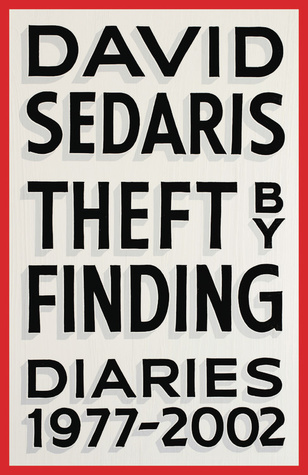
Theft By Finding is a collection of actual journal entries written by David Sedaris from 1977 to 2002. If you've ever read any of his other books, this one is right in line with his style - all his other books are written by consulting his journals for memories. These journal entries are equally hilarious as his stories from his books and with his same wit and sarcastic way of looking at the world. Some of the entries are more introspective, some are just to talk about something he noticed that was ridiculous. I highly enjoyed this book, and I would definitely recommend the audio book - just like most of his other books, this is read my Sedaris himself, so you get the true sound behind the words. I give this book 4 out of 5 stars.

Hedda Gabler is a classic play by Ibsen that I picked up at random. Hedda Gabler is a beautiful, well off woman who marries a man she thinks will be a genius of his time. She soon realizes that he will no climb as high as she once hoped, and due to her lack of any sympathy or moral fiber she starts envisioning other ways to improve her situation. She begins manipulating old friends and finds herself in a compromising position she has not anticipated. All her conniving eventually lead to her demise. I have to say I don't really understand the significance of Hedda Gabler. She is deliberately written as a terrible person, which makes me not really care what happens to her... I can see how this might make for an interesting play to watch, just not super interesting to read. My fault there. I give this book 3 out of 5 stars.

White Oleander is the story of what happens to the fictitious Astrid Magnusson, daughter of a murderess. When Astrid is young her mother poisons her ex-boyfriend and is put in prison, leaving Astrid in the hands of "the system", passed between group homes and foster care. Astrid is not the typical child to be in this position, so she sticks out from all the other children. She deals with being shot, the death of a beloved foster mother, the interest of an older man, and much more. Astrid tries to reconcile her situation with her mother as she deals with the life she has been thrust into. I picked this book up because I loved the film so much when I was in high school, and I was surprised at how close an interpretation the film is. I enjoyed the books just as much as the film. I give this book 4 out of 5 stars.

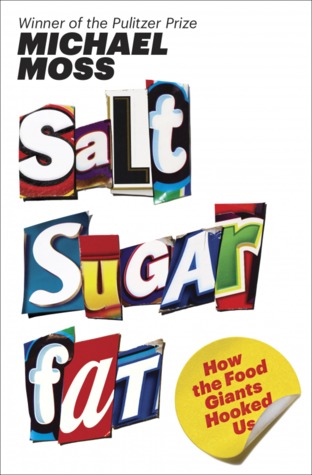
Salt Sugar Fat is an exposé of sorts written to enlighten us about what is actually in the food we eat. Big food companies have had little regulation with chemical additives in the foods we eat, letting them take advantage of consumer trust where food is concerned. Large food companies need to have something to make you want to buy their product over the competitor, so the 70s through the 90s became a free for all of added sugar, salt, and fat to improve the flavors of the foods we love, all things that toy with our brain chemistry and make us crave the foods more. This book talks a lot about the science of craving and how it has been studied and exploited. From a business aspect, this is all fair and it's technically our fault for not questioning the things we put in our mouths all along. From an ethical standpoint, it's a blatant breach of public trust. We thought food was food, so how would we question one of the most basic needs of human life when we had no reason to do so at the time? The result of all this salt, sugar, and fat is now one of America's most common health problems: obesity. The end of the book talks about what some companies are doing to help with the childhood obesity crisis, but really isn't it too little too late? We are all completely addicted to these additives to the point that we can't stand the taste of foods without them.

The books poses an interesting argument, but it was a little hard to get over the out and out "vigilante for justice" tone of the book. It's trying too hard to sell you on this idea. I prefer to have the information presented objectively, then maybe add the opinion of the author in the conclusion instead of having it throughout the entire book. This book was written to call out our food producers and government for allowing this to happen, but it in my mind this does bring up how much our personal involvement can be factored in. Did these companies add this junk to our foods? Absolutely. But did we, as consumers, pay attention to what we were eating? No we didn't. We just bought what tasted good, which we still do to this day. There is fault on both sides. In spite of my dislike of the books tone, there is still very good information in its pages. This is definitely worth a read, just keep in mind that you should try to hold off the open persuasiveness of the author. I give this book 3 out of 5 stars.

The Omnivore's Dilemma is an objective look at what our foods go through before they reach our plate. Michael Pollan does research from plant to plate on 4 separate meals: a modern, processed meal at McDonald's; a modern, processed "Certified Organic" meal; a local, non-processed organic meal; and a non-processed self gathered and hunted meal. The first meal reveals that everything in the McDonald's meal is made of corn in some way, going into detail about our government's ties with our corn producers and how it plays the major role of everything in our grocery stores. The second meal is obtained at Whole Foods with all certified organic products, involving research into the few regulations that actually make something "organic" legally speaking (basically just that no fertilizer was involved). The third meal is obtained from a small farm where the animals are all grass fed and circulated around the land to do the least damage to the ground, also the animals are killed on the premises and go straight to the hands of those who will eat them. The fourth meal is obtained entirely by the hands of the author - hunting for game, gathering plants, doing any additional processes himself.

I really loved this approach to understanding what happens to our food before we eat it - this really broke down some of the mysterious practices of food production as well as explaining the why behind each step. While the author does seem to lean toward the 3rd meal more than the others (frankly, after reading the book I don't see how you wouldn't), Pollan largely keeps his personal opinion out of the meals. He presents the information as it comes to him, but he still eats each of these meals himself. What I really liked was the discussion about the practicality of each meal in our modern society. While it would be great to be able to produce all of our food ourselves, it's just not realistic with the pace of the world today unless you completely unplug, which most of us are not able to do. This book really brings out great questions to ask yourself about what you are paying for and why with food. While it may not change everything you eat, it definitely gives you an honest look at exactly what you are eating. I give this book 5 out of 5 stars.


Wednesday, October 18, 2017

Book Reviews: 26 - 30 of 2017

Flowers for Algernon is the story of Charlie Gordon, a mentally handicapped thirty year old man with an IQ of 59. Charlie wants more than anything to be smart after being told he is dumb his entire life. He signs up for a research study to try to increase intelligence and he is chosen as the first human to undergo the surgery. He quickly goes from having the understanding of a 10 year old to surpassing phds and college professors in their ability to understand complex concepts, languages, and much more. All the time that Charlie is improving, he is monitored and put through tests to verify his progress. He has emotional struggles he has never had before, so he must go through therapy. Life in general becomes much more complicated as he overcomes great odds just to be considered "normal", but when he goes past those around him they start to resent him. All the while Charlie is very interested in what happens to Algernon, the laboratory mouse who was the first successful test subject of this surgery before himself, to see what may become his own fate.

This was a very interesting story, and I love the way it was written. The book is first person narrative, and you can easily track the difference in his intelligence just from how he describes the world around him. In his natural (lower IQ) state, Charlie is very superstitious and thinks that everyone he interacts with are his "friends" in spite of the fact that they are making fun of him constantly. As he improves, he loses his "friends" because they feel he's become too high and mighty for them. He also has more and more memories from his childhood come to mind that he had locked away somewhere in his brain, shedding light on why he responds to somethings in some ways. Overall this book is a great look into how psychology works and begs the question of if it is right to give someone the gift of intelligence if it could be taken away. Is it better to be blissfully ignorant to what is considered "normal life" or is it worth knowing what you are missing later on? All good questions. I very much enjoyed this book, and if you are interested in psychology I definitely recommend it. I give this book 4 out of 5 stars.
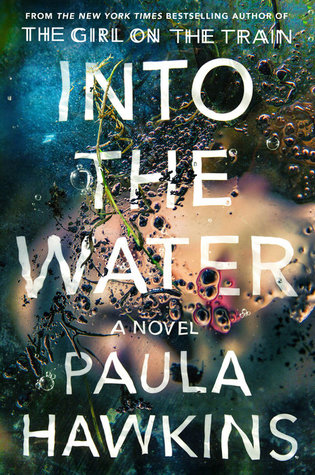
Into the Water follows the history of a small English riverside town with a dark past. When yet another local woman dies from apparent suicide in the water, investigators are sent in to determine what is going on. Was this suicide or was someone in the town upset that this woman was writing a book about "the drowning pool"? I liked the way the book progresses through each character's point of view. The story itself was definitely reminiscent of her previous book, The Girl on the Train. I like her writing style and it kept me guessing. I give this book 4 out of 5 stars.
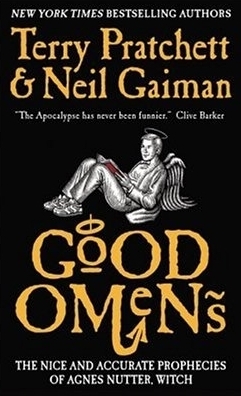
Good Omens is a hilarious story by Neil Gaiman and Terry Pratchett. It's the story of the apocalypse interpreted in extremely random ways. I don't want to give too much away, but it's awesome and you should read it, lol. I give this book 4 out of 5 stars.
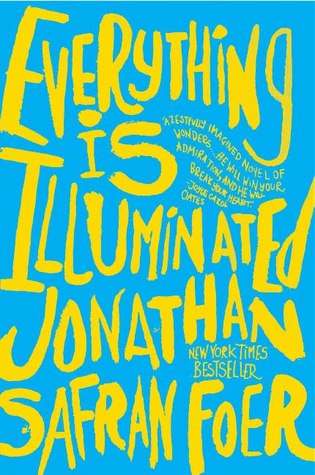
Everything Is Illuminated has been on my "to-read" list since college (when it was new), and I think I might have become too cynical in my years since because I just don't "get" this book. I love the story of Jonathan and Alex's trip through Ukraine - having loved the movie so much, this is the story I expected to read, but better than the film. The side story about the completely fictional history of Trachimbrod on the other hand ... what the heck? I've even gone to the extent of reading the reviews of others to see if there is some big point I missed, but I guess I'm just not in the early 20s mindset to appreciate this section of the book or something. I've read some reviews that say this section is Foer's attempt at philosophy, but I don't see what possible philosophy one could gain from this story. The characters are over-sexualized, as if sex is the only thing that motivates anyone no matter how young. It's just felt so odd and forced. I'm not generally a prude with what I read, but this was a bit over the top. The other, "modern" story makes up for this disappointment though, in my opinion.  I give this book 3 out of 5 stars.
We Should All Be Feminists is a very short and to the point essay on feminism. The author really breaks through all the preconceived political nonsense people attach to the word "feminist" and describes it at its core: the fact that women and men should be treated equally. She even speaks out against the excuse of, "Well EVERYONE should be treated equally, so why are you trying to put women above men?" by explaining that of course everyone should be treated equally, but it is only women who seem to need to demand this treatment in order to not be pushed aside. Men don't have this problem. Thus, we should all be feminists. This really put into words the way I have always felt about gender equality. It is not loaded with other hidden motives - it is a basic explanation of the issue we face throughout the word. We should all be feminists, and we should all read this book. I give this book 5 out of 5 stars.